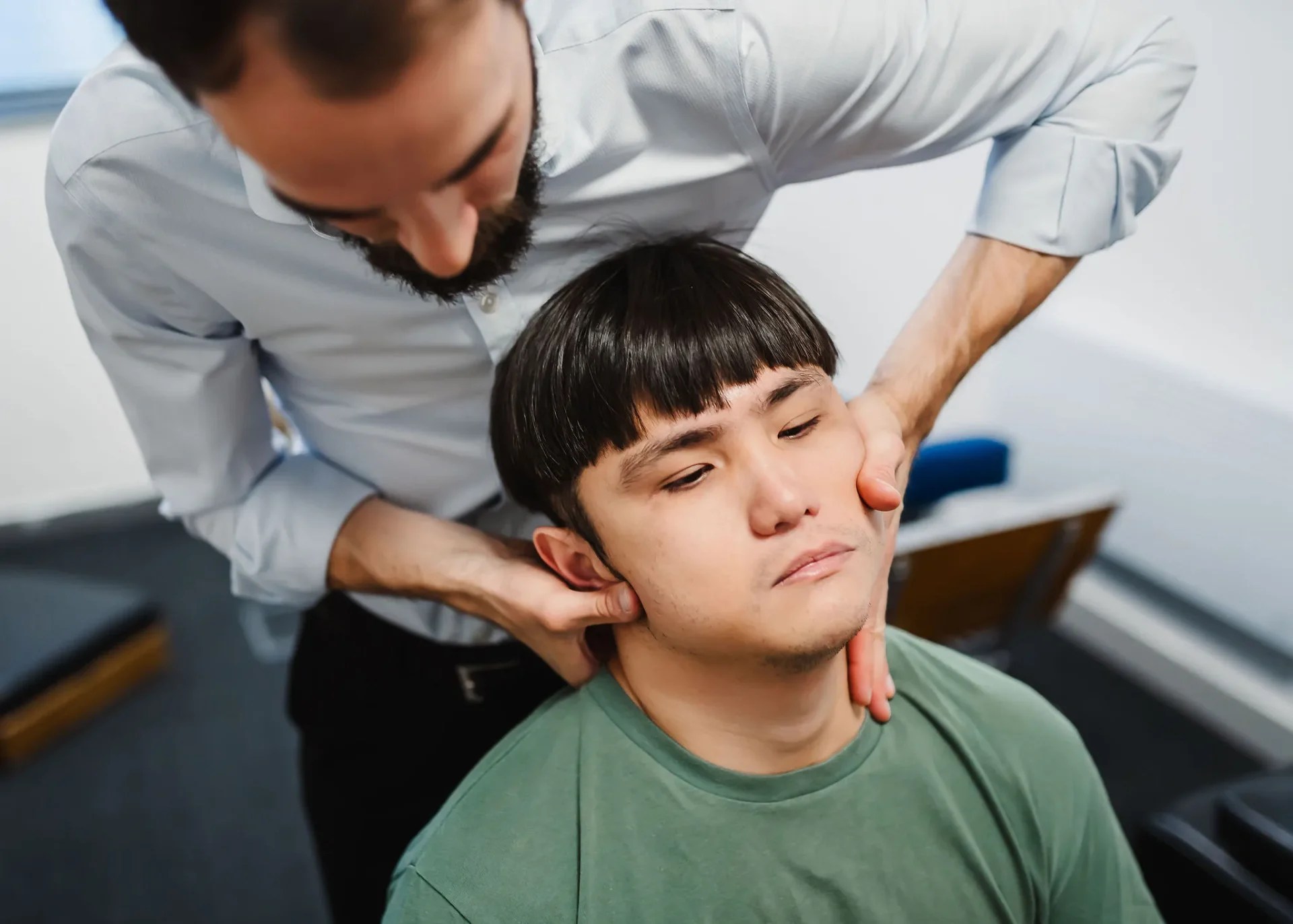
Most people feel noticeably better after a Chiropractic adjustment. Many notice an immediate sense of relief, increased mobility, or a reduction in pain from the very first session. This is the most common response, and it is a good sign that the body has responded well to the correction that has been made.
But not everyone follows that pattern, and it is worth understanding the full picture.
Some people feel little immediate change after an adjustment, particularly in the early stages of care. Others feel temporarily sore, tired, or as though their symptoms have briefly intensified before improving. If either of these has been your experience, you are not alone, and more importantly, you are probably not experiencing what you think you are.
These responses are recognised and well-understood. They do not mean something has gone wrong. In many cases, they are a sign that something has gone right. Understanding why requires a brief look at what an adjustment actually does to the body, and what happens in the hours and days that follow.
What the Adjustment Actually Does
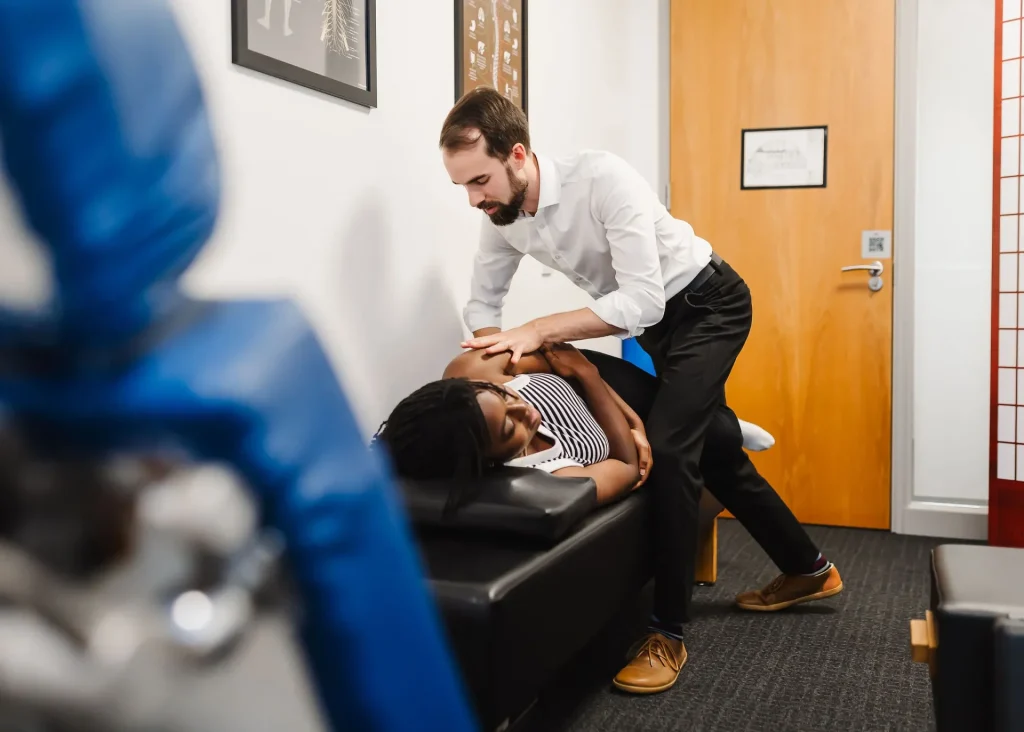
A Chiropractic adjustment restores normal position and motion to a spinal joint that has been restricted or misaligned. This sounds straightforward, but the implications for the surrounding tissues are significant.
A joint that has been restricted, sometimes for months or years, does not exist in isolation. The muscles surrounding it have adapted to hold it in that position. The ligaments have shortened and tightened around it. The nervous system has developed new patterns of movement and muscle activation that work around the restriction rather than through it. The body, in other words, has built an entire compensation strategy around the problem.
When the adjustment restores normal position and motion to that joint, all of those adaptations are suddenly no longer appropriate. The muscles that were bracing the area are asked to let go. The movement patterns that were routing around the restriction are no longer needed. The nervous system has to recalibrate to a new reality.
That process of recalibration is not always comfortable. And understanding why requires an analogy.
The Analogy of the Bent Sapling
Imagine a young tree that has grown up against a fence on one side. Over the years, it has adapted to that constraint, growing at an angle, its trunk curving away from the barrier. Its roots have spread in directions that support that leaning posture. Its bark has thickened on the side that bears the most load.
Now remove the fence.
The tree does not spring upright. It continues to lean, because everything about its structure, its roots, its trunk, the distribution of its weight, has adapted to the presence of the fence. Gradually, over time, with the constraint removed, it will begin to straighten. But the process of adaptation back toward a more balanced form takes time and involves stress on tissues that have been one way for a very long time.
Your spine after an adjustment is similar. The restriction has been removed. But the muscles, ligaments, and movement patterns that adapted around it are still there, still holding their old positions, still communicating through patterns that developed over months or years. Asking them to change, even in the right direction, creates a kind of organised discomfort as those tissues begin to adapt to their new mechanical environment.
This is what most people experience as feeling worse after an adjustment. It is not damage. It is adaptation.
The Body Then Has to Heal
There is a second process happening alongside the adaptation, and it helps to understand this one too.
When a spinal joint has been restricted for a long time, the surrounding tissues have often been under chronic, low-level stress. The muscles may have developed areas of tension and trigger points. The ligaments may be mildly inflamed. The nerves exiting the spine at that level may have been under mechanical irritation for an extended period.
When the adjustment restores motion to the joint and relieves that mechanical stress, the body can finally begin the process of healing those tissues properly. But healing is not a passive, comfortable process. It involves inflammation, increased blood flow to the affected area, and the breakdown and rebuilding of tissue. This is the same process that makes a healing muscle sore after exercise, or a healing wound tender to the touch.
Think of it like thawing something that has been frozen for a long time. The process of going from frozen to normal involves a messy, uncomfortable middle stage. Things look worse before they look better. But that middle stage is not a problem. It is part of the process of returning to a healthier state.
The soreness or fatigue you feel in the day or two following an adjustment is, in many cases, the body doing exactly what it should be doing. It is processing the change, healing the tissues that have been under stress, and recalibrating to a new mechanical baseline.
When You Do Not Notice a Change Straight Away
Sometimes the response to an adjustment is neither better nor worse immediately. You leave the clinic and feel broadly the same. This can be confusing, particularly if you were hoping for prompt relief.
It is important to understand that the absence of an immediate noticeable change does not mean the adjustment had no effect. Structural changes in the spine, and the neurological recalibration that follows them, do not always produce an immediate, obvious symptom change. The adjustment has been made. The joint has been corrected. The body has begun its process of adaptation. But that process unfolds over hours and days, not always within minutes of leaving the room.
Think of it like planting a seed. The act of planting is complete the moment you put it in the ground. But you do not see the result immediately. The work is happening beneath the surface, and the visible outcome comes later. Patients who feel little change after their first or second session often notice a meaningful shift after their third or fourth, as the cumulative effect of the corrections begins to take hold and the body stabilises in its new position.
This is a normal and expected part of the process. It does not mean the care is not working. It means the body is working.
How Long Should It Last?
For most people, post-adjustment soreness is mild to moderate and resolves within 24 to 48 hours. It is typically a diffuse, muscular discomfort rather than sharp or localised pain, and it often feels similar to the kind of soreness you might experience after an unaccustomed bout of exercise.
A few factors influence how pronounced this response is:
How long the problem has been present. A spine that has been restricted for years has had considerably longer to build compensatory adaptations than one that developed a problem recently. The longer the history, the more the body has adapted around it, and the more recalibration is required when the restriction is corrected.
How many levels were adjusted. If multiple segments were addressed in a single session, the cumulative demand on the body's adaptive capacity is greater.
Your general health and lifestyle. Sleep, hydration, stress levels, and physical activity all influence how quickly the body processes change.
First adjustments in particular tend to produce a more pronounced response than subsequent ones. As care progresses and the spine begins to stabilise in its corrected position, the body's response typically becomes milder and shorter-lived.
What You Can Do to Help
There are a few simple things that support the body's adaptation and healing process after an adjustment.
Stay hydrated. The spinal discs and surrounding tissues rely on adequate hydration to function well and recover effectively. Drinking plenty of water in the day or two following an adjustment supports this process in a way that is easy to overlook but genuinely worthwhile.
Move gently. Light movement keeps blood circulating to the affected tissues and helps prevent the surrounding muscles from tightening back into the compensatory patterns they are used to. A gentle walk is ideal. Avoid anything strenuous or high-impact in the immediate aftermath.
Rest if you need to. Fatigue after an adjustment is common, particularly in the early stages of care. The body is doing real work in response to the change, and that takes energy. If you feel tired, rest. It is part of the process.
Avoid heat immediately after. Warmth increases circulation and inflammation in the short term. In the first few hours after an adjustment, where some inflammatory response is already underway, heat can intensify this. If you want to apply something, a cool pack to a sore area is generally better in the immediate aftermath.
When to Be Concerned
Post-adjustment soreness is normal. However, there are circumstances where it would be appropriate to contact the clinic.
If pain is sharp, severe, or significantly worse than before your appointment rather than simply different, get in touch. If new neurological symptoms develop, such as numbness, tingling, or weakness in the limbs that were not present before, contact us promptly. And if soreness persists beyond 48 to 72 hours without any improvement, let us know so we can reassess.
These situations are uncommon, but it is always better to communicate than to wonder.
Frequently Asked Questions
Is it normal to feel tired after a Chiropractic adjustment? Yes. Fatigue following an adjustment, particularly in the early stages of care, is a recognised response. The body is expending energy adapting to the changes that have been made. Rest and good hydration support recovery.
Should I be worried if I feel worse the day after? Not usually. Mild to moderate soreness in the 24 to 48 hours following an adjustment is normal and expected, particularly after early sessions or following adjustments to areas that have been restricted for a long time.
Will this happen every time? Most people find that the response diminishes as care progresses. The body becomes more accustomed to the adjustments, and as the spine stabilises in its corrected position, the adaptive demand on the surrounding tissues reduces.
Does feeling worse mean the adjustment did not work? No. In many cases it means the opposite. The adjustment made a change significant enough for the body to respond to. That response is part of the process of adaptation and healing.
Should I take painkillers to manage the soreness? We would not recommend anti-inflammatories in the immediate aftermath of an adjustment, as the inflammatory response is part of the body's natural healing process. If soreness is uncomfortable, gentle movement, rest, and hydration are the most supportive approaches. Speak to us if you are concerned.
The Bottom Line
Feeling worse after a Chiropractic adjustment is not a sign that something has gone wrong. It is a sign that your body is responding to a real change and doing the work of adapting to it. The soreness is adaptation. The fatigue is healing. Both are part of the process.
If you have questions about your response to care, or if something feels unusual, always reach out. We would rather hear from you than have you worry in silence.
Book your initial consultation at Northwood Chiropractic Oxford.
👉 northwoodchiropracticoxford.co.uk/book-online
Published: 9th September 2026 Author: Dr Steven Hulme, Chiropractor, Northwood Chiropractic Oxford
