
Most people only think about seeing a Chiropractor when the pain becomes hard to ignore. By that point, the underlying problem has usually been building for considerably longer than the symptoms suggest. Understanding what to look for earlier, before things become severe or chronic, is one of the most valuable things you can do for your long-term health.
Here are seven signs that your spine and nervous system may need attention, and why none of them should be left to resolve on their own.
1. You Have Back or Neck Pain That Keeps Coming Back
The most obvious sign, but also the most frequently misunderstood.
Recurring back or neck pain is not simply bad luck or the inevitable result of getting older. When pain keeps returning in the same area, it almost always means that the underlying cause has not been addressed. Perhaps it settled with rest, or eased with painkillers or physiotherapy, but the structural issue driving it remained. And so, predictably, the pain returns.
Recurring pain is not the same problem happening repeatedly. It is the same problem that was never fully resolved, breaking through into symptoms again. A thorough spinal assessment will identify what is actually causing it, not just manage it until the next episode.

2. You Have Pain, Numbness, or Tingling Into Your Arms or Legs
Symptoms that travel away from the spine into the limbs are one of the clearest indicators of nerve involvement. Sciatica, which causes pain, tingling, or numbness that radiates from the lower back into the buttock and down the leg, is a well-known example. Similar patterns can occur in the arms from the cervical spine.
These symptoms occur when a spinal nerve is being irritated or compressed, typically by a misaligned vertebra or a disc that has lost its normal position. The sensation may be in the leg, but the source is in the spine.
Addressing the source rather than the symptoms is what produces lasting relief. Chiropractic assessment is designed to identify exactly where in the spine the problem originates and correct it specifically.

3. You Get Frequent Headaches
Most people are not aware that a significant proportion of headaches, particularly tension-type headaches and those that feel like they start at the base of the skull or behind the eyes, originate from the cervical spine rather than the head itself.
When the upper cervical vertebrae are misaligned or restricted, they irritate the surrounding nerves and muscles, referring pain upward into the head. These are called cervicogenic headaches, and they are often mistaken for tension headaches or migraines.
If you regularly reach for painkillers for headaches and find they only provide temporary relief, it may be worth investigating whether the cervical spine is contributing. Many patients who have lived with frequent headaches for years notice a significant reduction in both frequency and severity once the underlying spinal cause is addressed.

4. You Have Been Sitting at a Desk for Years and Your Posture Has Changed
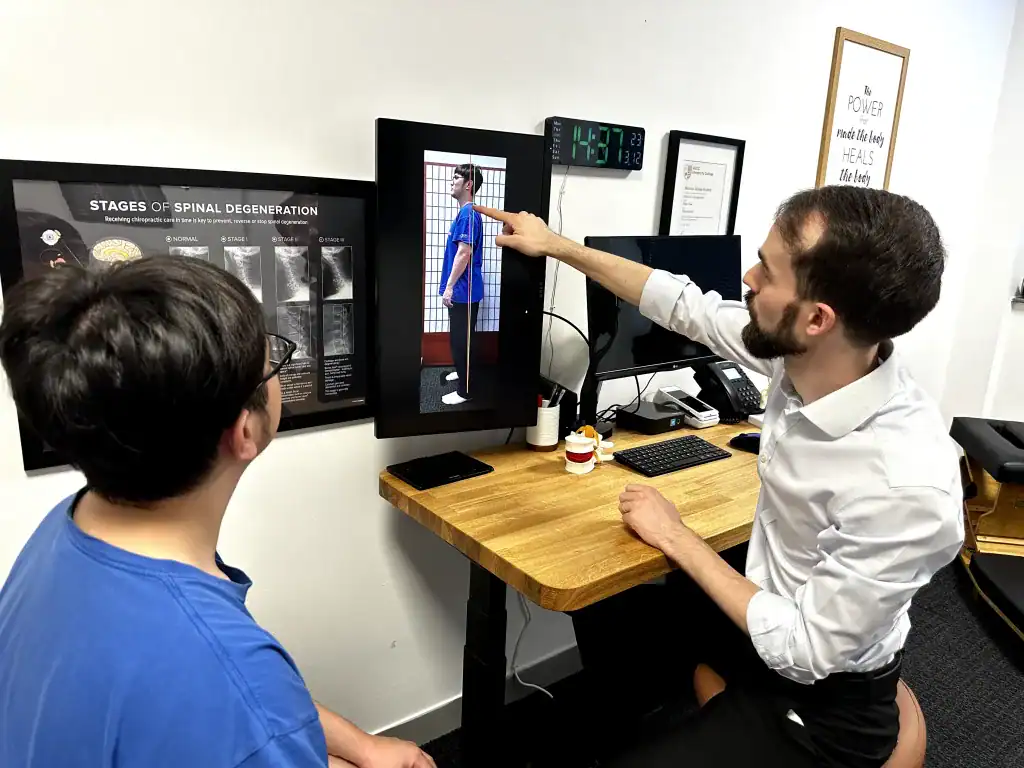
You may have noticed your head creeping forward, your shoulders rounding, or a bump forming at the base of your neck. These are not just cosmetic concerns. They are signs that the spine is adapting to sustained poor positioning, and that structural changes may already be underway.
The spine remodels itself based on the loads it is consistently placed under. Sustained desk work, phone use, and poor ergonomic setups create chronic low-level stress on the cervical and thoracic spine that, over time, leads to measurable changes in spinal alignment. These changes do not reverse themselves simply by sitting up straighter or doing occasional stretches.
If your posture has changed noticeably over the past few years, a structural assessment is worth having to understand exactly what has changed and what it will take to address it.
5. You Have One Shoulder or Hip That Sits Higher Than the Other
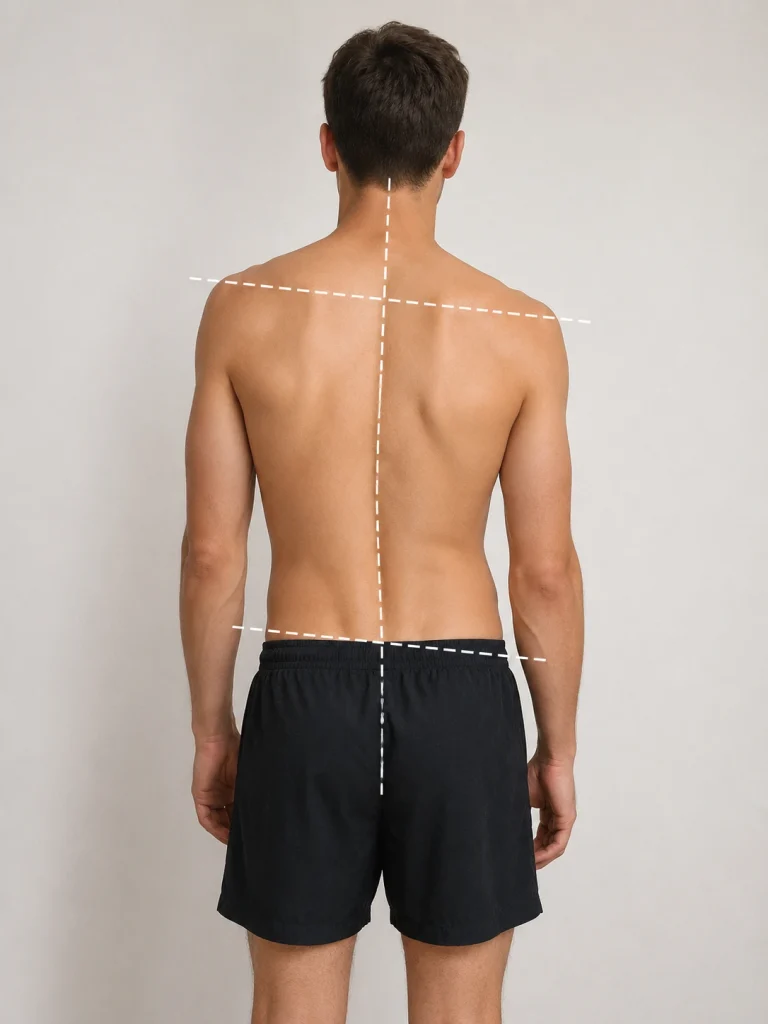
Visible asymmetry in the body is often a sign that the spine is compensating for an underlying restriction or misalignment. When one or more vertebral segments are not moving correctly, the surrounding musculature adapts to stabilise the area. Over time, this creates patterns of tension and compensation that become visible in how the body holds itself.
A shoulder that sits higher on one side, a hip that appears elevated, or a head that tilts consistently to one side are all worth taking seriously. They are the body's way of communicating that something is off in the underlying structure. The longer these compensations are left unaddressed, the more established they become and the more work is required to correct them.
6. You Have Had a Recent Fall, Accident, or Whiplash Injury
Trauma to the spine, even when it does not cause immediate severe pain, can leave vertebral segments misaligned and the surrounding soft tissues disrupted. Whiplash injuries in particular are notorious for producing symptoms that do not appear until days or weeks after the incident, by which time the structural consequences are already established.
It is common for people to have a minor accident, feel broadly okay, and assume no damage was done. In many cases they are right. But in others, the spine has been disturbed in ways that will cause problems down the line if left unassessed. Getting checked following any significant impact to the spine is sensible, regardless of whether pain is present immediately.

7. You Feel Stiff in the Morning or After Sitting for Long Periods
Stiffness that takes time to ease after rest, or that builds after sitting for an extended period, is a reliable indicator that spinal joints are not moving as freely as they should. Healthy joints are lubricated by movement. When they become restricted, they stiffen and become uncomfortable, particularly after periods of inactivity.
This kind of stiffness is easy to dismiss as normal, particularly as we get older. It is not. It is a sign that joints are not functioning correctly, and that the surrounding tissues are adapting to restricted movement. Addressed early, joint restriction responds well to Chiropractic care. Left for years, the changes become more structural and more challenging to reverse.

What These Signs Have in Common
Every one of the seven signs above shares a common thread: they are all signals that the spine and nervous system are not functioning as they should, and that the body is compensating in ways that will cause increasing problems over time if the underlying cause is not identified and addressed.
None of them should be dismissed as normal, temporary, or simply a part of ageing. And crucially, none of them will tell you from the outside exactly what is happening structurally. That requires a proper assessment.
What the Assessment Actually Tells You
A thorough Gonstead assessment at Northwood Chiropractic Oxford gives us an objective, detailed picture of your spine. Postural analysis shows how the body is holding itself. Instrumentation identifies areas of nerve irritation along the spine. Palpation assesses how each segment is moving and where restrictions exist. Standing X-rays, where indicated, give us a precise view of spinal alignment, disc health, and the degree of any structural change that has occurred.
By the end of the assessment, you will know more about your spine than you ever have before. You will know what is causing your symptoms, how long the problem appears to have been developing, and what it will take to address it properly. If Chiropractic is the right fit, we will explain exactly what we found and what we recommend. If another form of care would serve you better, we will tell you and point you in the right direction.
Frequently Asked Questions
How do I know if my headaches are coming from my neck? Cervicogenic headaches, those originating from the cervical spine, typically start at the base of the skull and radiate forward. They are often accompanied by neck stiffness and are frequently one-sided. A Chiropractic assessment will identify whether there is a spinal component driving your headaches.
Is it too early to see a Chiropractor if my pain is mild? No. In fact, mild or intermittent symptoms often indicate that the underlying problem is in its earlier stages, making it more straightforward to address. Waiting for pain to become severe before seeking assessment means the structural changes have more time to become established.
Do I need a GP referral? No. Chiropractors are primary contact practitioners. You can book directly without seeing your GP first.
What if I have had these symptoms for years? Long-standing problems can still respond well to Chiropractic care, though they typically require a longer course of correction. The assessment will give us a clear picture of how established the problem is and what is realistically achievable.
Can children and older adults be assessed too? Yes. The spine is under load from birth onwards, and Chiropractic assessment is appropriate across all ages. The approach is adapted to suit the individual.
The Bottom Line
If you recognise yourself in any of the seven signs above, the right next step is not to wait and see. It is to find out what is actually going on.
The earlier a spinal problem is identified, the more straightforward it is to address. The longer it is left, the more established the structural changes become. A thorough assessment gives you answers, not guesswork, and puts you in a position to make an informed decision about your health.
Book your initial consultation at Northwood Chiropractic Oxford today.
👉 northwoodchiropracticoxford.co.uk/book-online
Published: 3rd September 2026 Author: Dr Steven Hulme, Chiropractor, Northwood Chiropractic Oxford
