One of the most common misconceptions about Chiropractic care is that it is only suitable for younger, active people, or that it becomes less appropriate as the body ages. In reality, the opposite is often true. The musculoskeletal changes that come with age, reduced mobility, stiffening joints, postural changes, and the cumulative load of decades of daily life, are precisely the kind of issues that Chiropractic is well placed to assess and address.
Older adults are some of the most motivated and responsive patients we see. They tend to understand their bodies well, they know what they have lost in terms of mobility and comfort, and they are often clear about what they want to get back. With the right approach, Chiropractic care can make a meaningful difference to how an older person moves, functions, and feels day to day.

Is Chiropractic Safe for Older Adults?
This is usually the first question, and it deserves a direct answer: yes, Chiropractic care is safe for older adults when delivered by a qualified, registered Chiropractor who adapts their technique appropriately.
The key word is adaptation. An older patient is not treated in the same way as a 25-year-old athlete. Tissue changes with age. Bone density may be reduced. Joints may be arthritic. Ranges of motion are often more limited. A competent Chiropractor takes all of this into account when assessing and planning care, and chooses techniques that are appropriate to the individual's age, health, and presentation.
At Northwood Chiropractic Oxford, we use the Gonstead system, an approach that is specific rather than general. Rather than applying the same technique to every patient, we identify the precise segments of the spine or pelvis that are restricted or dysfunctional and work on those specifically. This level of precision matters particularly in older patients, where indiscriminate, broad-based manipulation would be less appropriate.
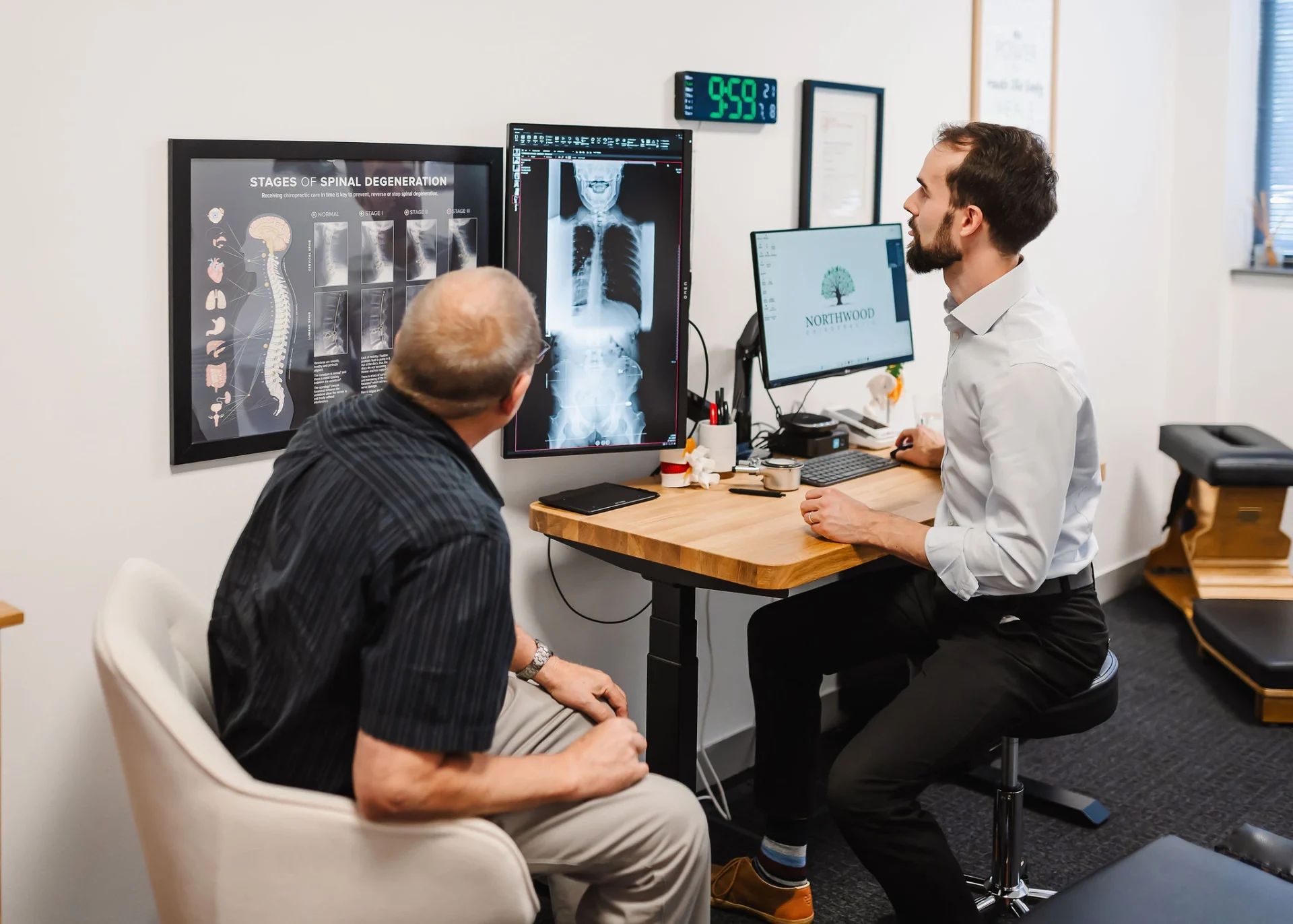
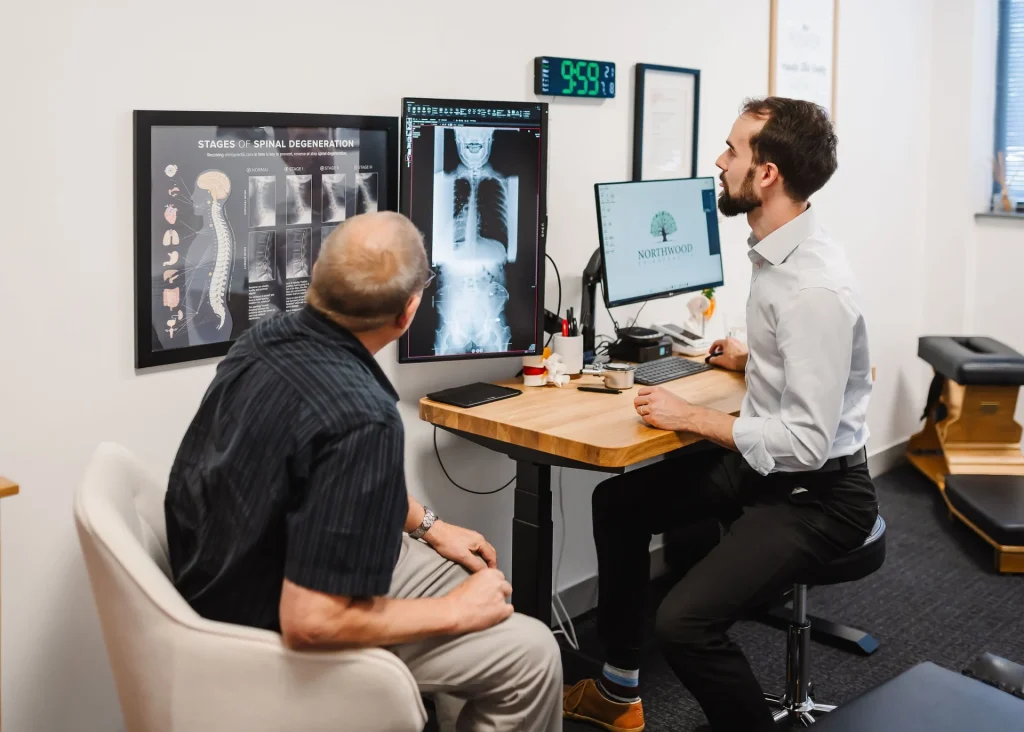
Before any care begins, we carry out a thorough assessment. This includes a full case history, postural and movement analysis, neurological screening, and X-rays where clinically indicated. For older adults, X-rays are often particularly useful, as they reveal the degree of arthritic change, bone quality, and structural presentation that shapes the entire care approach. We do not guess, and we do not apply a generic protocol. The care plan is built around what we find.
What Conditions Can Chiropractic Help With in Older Adults?
The range of presentations we see in older patients is broad. Some of the most common include:
Back and Neck Pain
Spinal pain is extremely common in older adults and is often attributed simply to age or wear and tear. While degenerative changes are real and do increase with age, they are not automatically the cause of pain, and they do not mean that nothing can be done. Many older patients with significant degenerative changes have been managing pain for years, unaware that the restricted, dysfunctional segments within those changes can still be specifically identified and addressed.
Improving the movement and mechanics of restricted spinal segments reduces the abnormal load on the surrounding tissues, often producing meaningful and lasting reductions in pain and stiffness.
Stiffness and Reduced Mobility
Stiffness is one of the complaints we hear most frequently from older patients, particularly first thing in the morning or after periods of sitting. It affects quality of life significantly, limiting the ability to drive, garden, play with grandchildren, or simply move through daily life with ease.
Spinal restrictions contribute directly to this stiffness. When joints are not moving as they should, the body compensates, surrounding muscles tighten to protect the area, and the overall range of motion diminishes. Specific Gonstead adjustments restore movement to restricted segments, and patients consistently report improvements in their overall ease of movement following a course of care.
Balance and Fall Risk
Falls are one of the leading causes of serious injury in older adults, and balance problems are frequently underappreciated as a health concern. The spine and nervous system play a central role in proprioception, the body's ability to sense its own position in space. When spinal function is compromised, proprioceptive input to the brain is disrupted, and balance can be affected as a result.
Research has suggested that Chiropractic care may contribute to improvements in balance and proprioception in older adults. While it is not a substitute for falls prevention programmes or physiotherapy input where those are indicated, addressing spinal dysfunction as part of a broader approach to balance and stability makes clinical sense and is something we consider in older patients who report unsteadiness or a history of falls.
Arthritis
Arthritis is almost universal in older spines to some degree, and many patients arrive having been told that their pain is simply a consequence of their arthritis and that there is little to be done. This is rarely the whole picture.
Chiropractic cannot reverse arthritic change. What it can do is restore movement to the segments that have become restricted, reduce the abnormal loading patterns that accelerate joint degeneration, and improve the overall function of a spine that has been compensating around arthritic areas for years. Many patients with significant arthritis find that their pain levels reduce and their function improves meaningfully with specific, well-planned Chiropractic care.
Headaches
Cervicogenic headache, headache originating from the neck, is common in older adults and is often related to degenerative changes in the upper cervical spine or to chronic postural loading over many years. Specific assessment of the upper cervical segments, combined with appropriate Gonstead care, can produce significant reductions in both the frequency and intensity of this type of headache.
What to Expect at Your First Appointment
The first visit is always assessment-led. We take time to understand your full history, what has changed over the years, what you have tried before, and what your goals are. We then carry out a thorough physical examination and explain our findings clearly before discussing what care may be appropriate.
Nothing is rushed. For older patients in particular, we take the time to explain what we are finding, what it means, and what we can realistically offer. If we believe that Chiropractic care is not the right approach, or that another form of care should take priority, we say so.
Care is always adapted to the individual. The force, technique, and positioning used for an older patient is entirely different from that used for a young adult, and is guided by what we find in the assessment, not by a fixed protocol.
It Is Never Too Late to Address Spinal Health
We regularly see patients in their 70s, 80s, and beyond who have been managing pain, stiffness, or reduced mobility for years, often assuming that this is simply the price of getting older. In many cases, specific structural problems have gone unidentified and unaddressed for decades.
Age is not a barrier to Chiropractic care. The body retains a remarkable capacity to respond and adapt at every stage of life. The goal is not to turn back time, but to restore as much function and comfort as possible so that people can continue doing the things that matter to them.
If you have questions about whether Chiropractic care is appropriate for you or someone you care for, we are happy to discuss this before you book. Contact the clinic or book a new patient assessment and we will give you an honest picture of what we can and cannot help with.
Dr Steven Hulme, Chiropractor — Northwood Chiropractic Oxford
