
Dizziness is one of those symptoms that people find difficult to describe and even harder to get answered. It might feel like the room is spinning, like you are off balance, or like a general sense of unsteadiness that comes and goes without obvious reason. For some people it is occasional and mild. For others it is frequent enough to affect daily life, driving, and the ability to move freely without concern.
What many people do not realise is that dizziness and vertigo are frequently linked to problems in the neck or inner ear, both of which Chiropractic care is well placed to assess and address. This blog explains the most common causes of dizziness, how they connect to the spine and nervous system, and what a thorough Chiropractic assessment can reveal.
Not All Dizziness Is the Same
Before exploring how Chiropractic can help, it is worth understanding that dizziness is a broad term covering several distinct presentations, each with a different underlying cause.
Vertigo is the sensation that you or your surroundings are spinning or moving when they are not. The most common cause is a condition called Benign Paroxysmal Positional Vertigo, or BPPV, which involves tiny calcium crystals in the inner ear becoming displaced and sending false signals to the brain about movement and position.
Cervicogenic dizziness is dizziness that originates from the cervical spine. When the joints and soft tissues of the upper neck are restricted or misaligned, the proprioceptive signals they send to the brain, the information about where the head is in space, become inaccurate. The brain receives conflicting information from the neck and the inner ear, and the result is a sense of dizziness or disorientation.
Dizziness related to nerve compression can occur when restricted cervical joints irritate the surrounding nerves and blood vessels, affecting circulation and neurological function in ways that produce symptoms of dizziness, brain fog, or unsteadiness.
Understanding which of these is driving your symptoms is the starting point for effective care.
BPPV and the Epley Manoeuvre
BPPV is one of the most common causes of true rotational vertigo, and it is something we treat regularly at Northwood Chiropractic Oxford with very good results.
The condition occurs when calcium carbonate crystals, called otoliths, become dislodged from their normal position in the inner ear and migrate into one of the semicircular canals. When the head moves in certain directions, these crystals move through the canal and trigger a false sense of spinning that can be intense, disorienting, and frightening, even though it typically lasts only a matter of seconds to minutes.
The good news is that BPPV responds extremely well to a specific repositioning procedure called the Epley manoeuvre. This is a guided sequence of head and body movements designed to move the displaced crystals back to their correct position in the inner ear. When performed correctly and on the right type of vertigo, it produces rapid and often immediate relief. Many patients see significant improvement within one to three sessions.
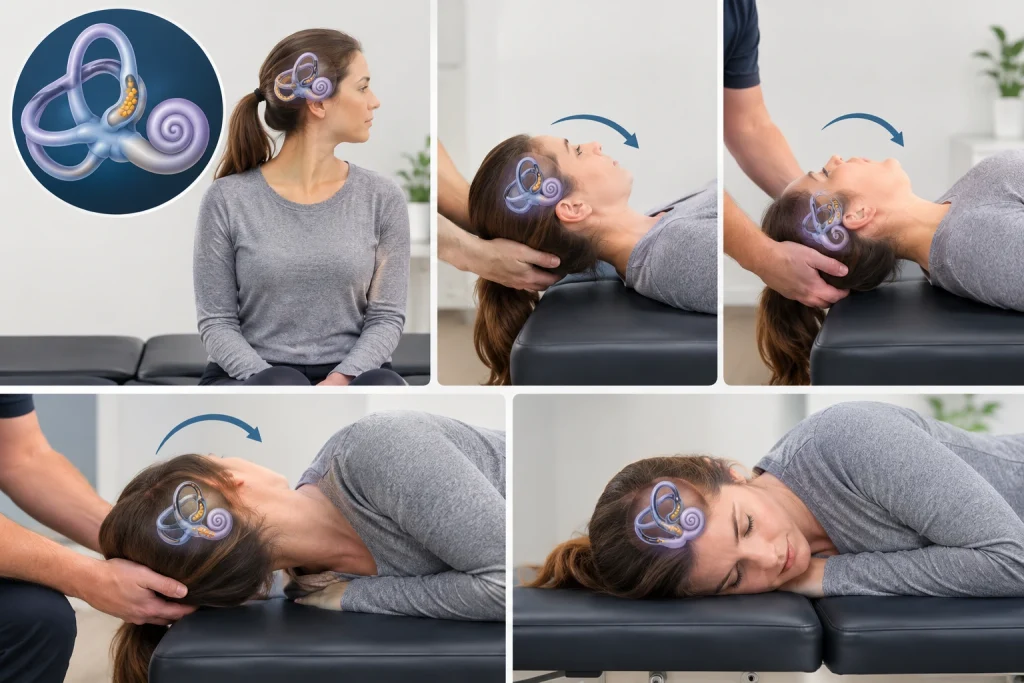
The key is accurate diagnosis. The Epley manoeuvre is highly effective for BPPV specifically, but it is not the appropriate treatment for every type of dizziness. A thorough assessment to establish what type of dizziness is present is always the first step.
Cervicogenic Dizziness and the Role of the Cervical Spine
Cervicogenic dizziness is less well known than BPPV but is a significant contributor to the chronic, low-grade dizziness and unsteadiness that many people live with for years without an explanation.
The upper cervical spine, particularly the joints at the top of the neck, is richly supplied with proprioceptors — sensory receptors that continuously send information to the brain about the position and movement of the head. This information is integrated with signals from the inner ear and the eyes to give us our sense of balance and spatial orientation.
When the upper cervical joints are restricted or misaligned, the proprioceptive signals they send become disrupted or inaccurate. The brain receives conflicting information and struggles to reconcile it. The result is a sense of dizziness, fogginess, or unsteadiness that is often worst with movement and may be accompanied by neck stiffness, headaches, or tension at the base of the skull.
This type of dizziness does not respond to medication and does not show up on standard tests, which is partly why many people with cervicogenic dizziness go undiagnosed for long periods. It does, however, respond well to Chiropractic care directed at the underlying cervical restriction.
What the Assessment Identifies
At Northwood Chiropractic Oxford, a patient presenting with dizziness or vertigo receives a thorough assessment before any care is undertaken. This is particularly important with dizziness, because the approach differs significantly depending on the cause.
The assessment includes a detailed case history to understand the nature of the dizziness — when it occurs, what triggers it, how long it lasts, and whether it is associated with particular head movements. Positional testing identifies whether BPPV is present and, if so, which canal is affected and which ear is involved. This information determines the specific variant of the Epley manoeuvre required.
The Gonstead spinal assessment evaluates the cervical and upper thoracic spine for restriction and misalignment that may be contributing to cervicogenic symptoms. Instrumentation, palpation, and postural analysis all contribute to building a complete picture of what is happening in the neck.
Where there is any uncertainty about the cause of dizziness, we will refer for appropriate medical investigation before proceeding. Patient safety is always the priority, and some causes of dizziness require medical assessment rather than Chiropractic care.
What Results Can You Expect?
For BPPV treated with the Epley manoeuvre,depending on how long it's been there for, results can be rapid. Many patients experience significant relief within one to three sessions, and for some the improvement is immediate. The procedure is not uncomfortable and most people tolerate it well.
For cervicogenic dizziness, the response tends to be more gradual, reflecting the need to correct underlying cervical restriction and allow the proprioceptive system to recalibrate over time. Improvement typically occurs progressively over a course of care, with many patients noticing a reduction in both the frequency and intensity of symptoms as the cervical spine is corrected and stabilised.
As with all presentations, the assessment gives us a much clearer picture of what to expect in your specific case.
When to Seek Urgent Medical Attention
It is important to be clear that not all dizziness is appropriate for Chiropractic assessment as a first step. Dizziness accompanied by any of the following should be assessed medically as a matter of urgency.
Sudden severe dizziness with no prior history, particularly if accompanied by headache, difficulty speaking, visual disturbance, or weakness in the limbs. These can be signs of a serious neurological event and require immediate medical attention.
Dizziness following a head injury. Dizziness associated with significant hearing loss or ringing in the ears that has come on suddenly. Dizziness in the context of unexplained weight loss, fatigue, or other systemic symptoms.
If you are unsure whether your dizziness falls into any of these categories, speak to your GP or give us a call and we can assess whether we may be able to help before you book.
Frequently Asked Questions
How do I know if my dizziness is BPPV or cervicogenic? The two can feel similar and sometimes coexist. BPPV typically produces intense rotational spinning triggered by specific head movements, lasting seconds to a minute. Cervicogenic dizziness tends to be more constant, lower-grade, and associated with neck stiffness or movement. A thorough assessment will distinguish between them.
Is the Epley manoeuvre safe? Yes. When performed by a trained practitioner on a correctly diagnosed presentation of BPPV, the Epley manoeuvre is safe and highly effective. It is not appropriate for all types of dizziness, which is why accurate diagnosis first is essential.
How many sessions will I need? For BPPV, often one to three sessions. For cervicogenic dizziness, typically a course of care over several weeks, with reassessment at regular intervals.
Can dizziness be caused by something serious? In most cases, dizziness has a benign cause such as BPPV or cervicogenic dysfunction. However, some causes of dizziness do require medical investigation. We will always refer appropriately if there is any concern.
Do I need a GP referral? No. You can book directly with us. If we find on assessment that your dizziness requires medical investigation before Chiropractic care is appropriate, we will advise you clearly.
The Bottom Line
Dizziness and vertigo are conditions that far too many people simply put up with, often because they do not realise there is a specific and effective answer. Whether the cause is BPPV, cervicogenic dysfunction, or a combination of both, a thorough assessment is the starting point for getting real answers and real relief.
At Northwood Chiropractic Oxford, we assess and treat dizziness regularly and get consistently good results. If dizziness is affecting your daily life, it is worth finding out what is actually driving it.
Book your initial consultation at Northwood Chiropractic Oxford today.
👉 northwoodchiropracticoxford.co.uk/book-online
Published: 30th September 2026 Author: Dr Steven Hulme, Chiropractor, Northwood Chiropractic Oxford
