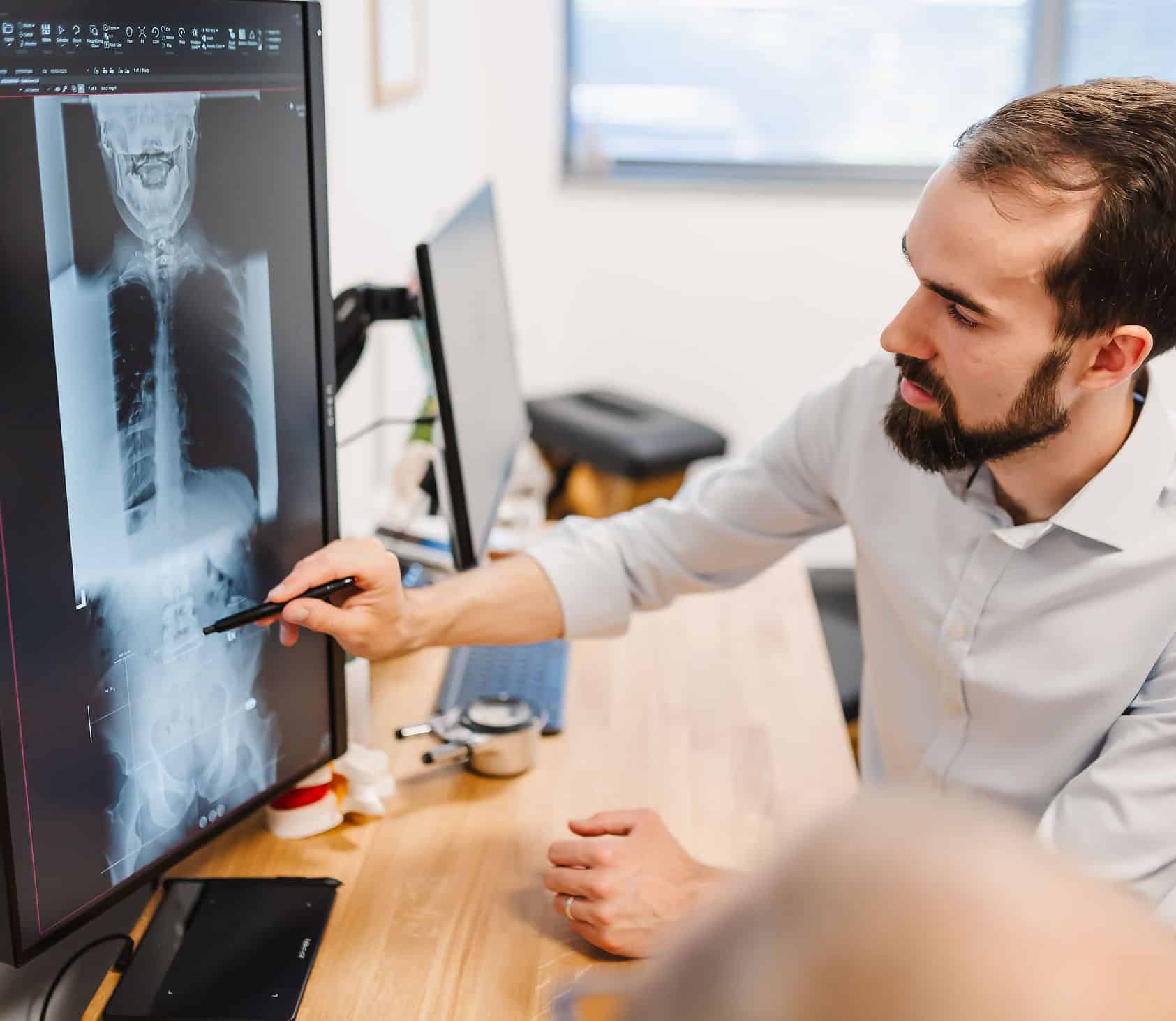
A common question we get is, “Will I need an X-ray?”
The simple answer is no, not everyone does. It depends on the case. X-rays are only recommended when your case is more complex, long-standing, or there is a history of trauma that needs a closer look.
When Are X-Rays Needed?
X-rays may be useful if:
- Your problem has been there for a long time
- Symptoms are more persistent or severe
- You have had previous injuries or trauma
- Your presentation is not straightforward
- You have been unresponsive to previous treatments
In these situations, we want to understand exactly what is going on beneath the surface.
What Do X-Rays Show?
An X-ray gives us a clear picture of your spine’s structure.
We can see:
- The position of your bones and joints
- Your spinal alignment
- Changes that may have developed over time
This level of detail helps us move beyond guesswork and understand your spine as it actually is, not just how it feels.
Why Does This Matter?
Think of it like a surgeon preparing for an operation. They would not operate without first understanding exactly what they are working with. An X-ray gives us that same level of insight before making an adjustments to the spine.
Without it, we are making general decisions. With it, we can be far more specific.
More Precise, More Effective Care
When we can see the exact position of a restricted or misaligned joint, we can tailor our adjustments much more precisely.
This means:
- More targeted care
- Better correction of the problem area
- Longer lasting results
It allows us to focus on the root cause rather than just chasing symptoms.
Safety Comes First
Another important role of X-rays is safety.
They help us rule out:
- Fractures
- Structural abnormalities
- Other underlying conditions that may mean chiropractic care is not appropriate
Your safety is always the priority, and imaging can help ensure we are making the right decisions for your care.
The Bottom Line
X-rays can be incredibly valueable to helping us get to the bottom of your issue.
They allow us to:
- Understand your spine in detail
- Provide more precise adjustments
- Ensure your care is safe and appropriate
Ultimately, they help us deliver care that is both safer and more effective, giving you the best possible outcome.
