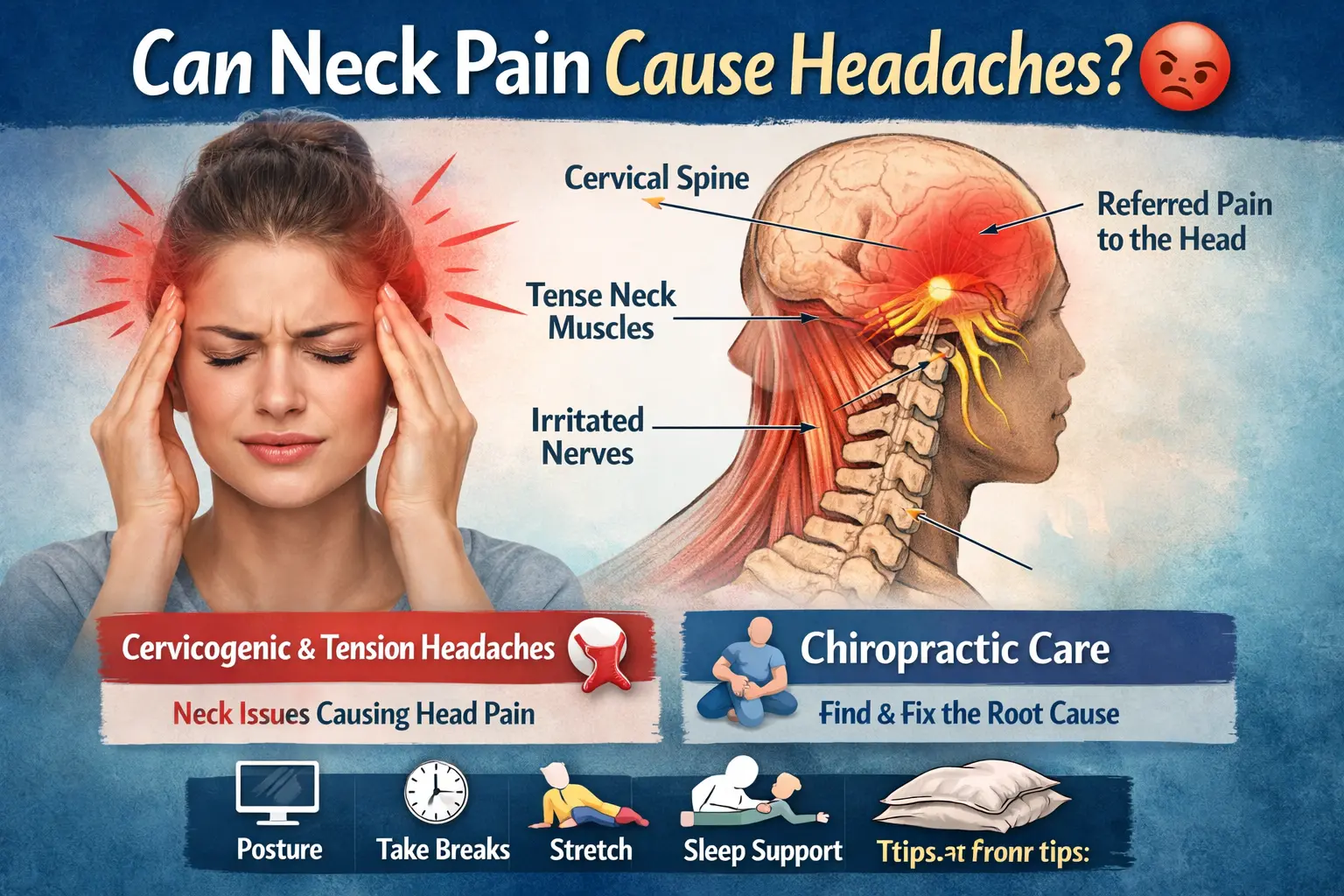
If you suffer from frequent headaches, you might be surprised to learn that the source of your pain may not actually be your head at all… but your neck.
This is something we see regularly in clinic, and for many people, it can be the missing piece of the puzzle when it comes to long-standing headaches.
How the Neck and Head Are Connected 🧠
Your neck, also known as the cervical spine, plays a crucial role in supporting your head and protecting the nerves that travel between your brain and body.
At the top of the neck, there is a close relationship between the upper cervical joints, surrounding muscles, and the nerves that supply sensation to the head and face.
When something isn’t moving or functioning properly in this area, it can refer pain upwards into the head.
This is often what we call:
- Cervicogenic headaches – headaches that originate from the joints in the neck
- Tension-type headaches – often linked to tight or overworked neck and shoulder muscles
In both cases, the problem starts in the neck, but the pain is felt in the head.
Why Does This Happen? 🤔
Think of your neck like the base of a lamp.
If the base is slightly off or unstable, the top of the lamp won’t sit properly. Over time, this creates strain through the whole structure.
Similarly, when the joints in your neck aren’t moving correctly, or your muscles are under constant tension, it places stress on the surrounding nerves and tissues.
This can lead to:
- Pain that starts in the neck and spreads to the back or front of the head
- Headaches that feel worse after long periods sitting or working at a desk
- Stiffness or reduced movement in the neck
- Recurring headaches that come and go
How Chiropractic Can Help 💆♂️
Chiropractic care focuses on identifying and correcting the underlying cause of the problem, not just masking the symptoms.
With a thorough assessment, we look at:
- How your spine is moving
- Areas of restriction or imbalance
- Muscle tension and posture
- The root cause of your headaches
At Northwood Chiropractic Oxford, we use a specific approach to:
- Improve movement in the cervical spine
- Reduce pressure on irritated nerves
- Ease muscle tension
- Help your body function more efficiently
For both cervicogenic and tension-type headaches, addressing the neck is often the key to long-term relief.
Top Tips to Help Neck-Related Headaches 👍
Here are some simple things you can start doing today:
1. Check your posture
Keep screens at eye level and avoid slouching, especially when using phones or laptops.
2. Take regular breaks
If you sit for long periods, stand up and move every 30 to 60 minutes.
3. Stay mobile
Gentle neck movements and stretches can help prevent stiffness building up.
4. Be mindful of your sleep position
Use a supportive pillow and avoid sleeping on your stomach where possible.
5. Manage stress
Stress often shows up as tension in the neck and shoulders, which can trigger headaches.
The Most Important Step ✔️
While these tips can help, the most important step is finding out what is actually causing your headaches.
Not all headaches are the same, and treating the wrong thing will only lead to frustration.
A thorough assessment allows us to:
- Identify whether your headaches are coming from the neck
- Understand the exact cause of the issue
- Create a plan to address the problem at its root
Final Thoughts 💭
If your headaches keep returning, getting worse, or lasting longer than they used to, it’s worth looking beyond the symptoms.
Your neck could be playing a much bigger role than you realise.
By addressing the cause, rather than just managing the pain, you give your body the best chance to recover properly and stay well long term.
If you’re unsure whether your headaches could be coming from your neck, getting checked is the best place to start.
